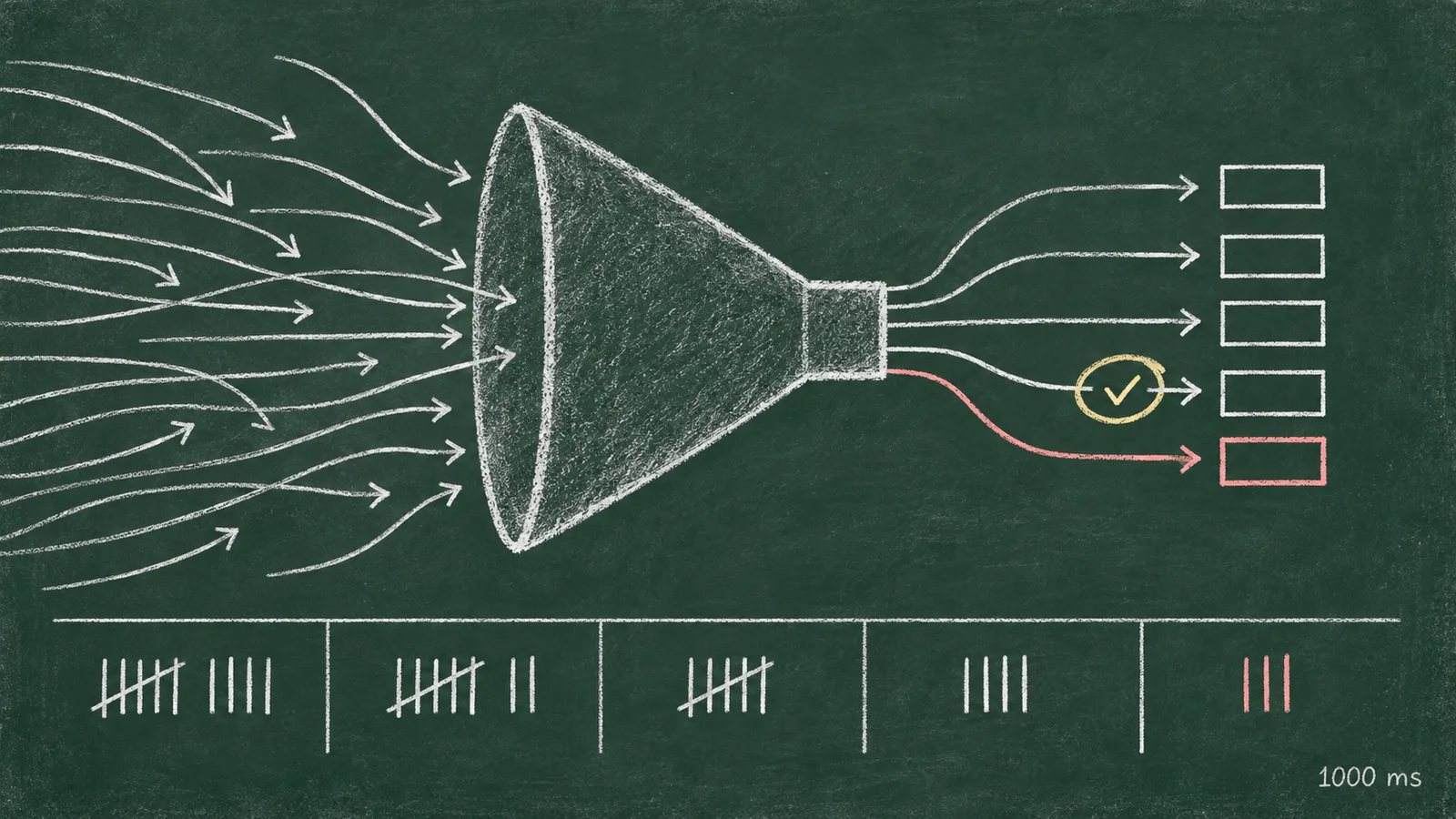
Buyers do not bid on your inventory. They bid on a path to your inventory, and that path may pass through two, three or four intermediaries before a bid request reaches the ad slot on your page. Supply path optimization (SPO) is the practice by which buyers identify the shortest, cheapest, most transparent of those paths and concentrate their spend on it. When a buyer prunes a path, every publisher sitting behind the pruned intermediary loses bids, and every publisher sitting behind the retained path gains them. The IAB Europe SPO 101 factsheet documents this as standard buyer strategy across the programmatic market, not a niche tactic. If you sell inventory through OpenRTB, SPO already shapes your CPMs, your fill rate and the number of demand partners that actually bid on you. This article explains the mechanics from the sell side: why buyers prune, what signals they read, and how you position your inventory on the winning side of the pruning decision.
What Supply Path Optimization Actually Is
Every OpenRTB bid request carries metadata about who is selling. A request leaving your site may originate with your ad server or your header bidding wrapper, pass to an SSP, get resold to another exchange, and only then reach a DSP. Each hop adds a take rate, adds latency and adds ambiguity about who the true seller is. Buyers see the same impression arrive multiple times from different routes at different prices, and they pay the take rates of every intermediary on the chosen route.
SPO is the buyer-side process of answering a simple question: for a given publisher and a given impression, which route gives me this inventory at the lowest total cost with the highest confidence that it is legitimate? Once the buyer answers it, the buyer stops bidding on the expensive or opaque routes and concentrates budget on one or two preferred paths. The mechanics of the bid request itself, the fields buyers inspect and the protocols that carry them, are covered in detail in our OpenRTB guide.
Two things matter for publishers here. First, SPO decisions happen at the buyer, not at you. You cannot opt out. You can only influence the inputs the buyer evaluates. Second, SPO decisions are not permanent. Buyers re-run their analysis quarterly or when performance shifts, which means your path economics are always under review.
Why Buyers Prune Supply Paths
The buyer's reasoning follows money and risk. Understanding it tells you which of your demand configurations survive pruning.
Cost stacking is the first driver. When your impression reaches a DSP through three intermediaries, each one takes a margin. The buyer pays the sum, so the buyer prefers the route with the fewest tolls. If two exchanges offer the same impression and one sits one hop closer to you, the closer exchange wins the buyer's budget even if the far exchange technically delivers the same ad.
Duplicate impressions are the second driver. A single ad slot often generates bid requests through several resellers, and the DSP receives what looks like the same impression five times at five different prices. Buyers call this the duplicate problem, and it inflates their costs, corrupts their frequency management and makes auction outcomes unpredictable. Pruning duplicates down to one canonical path fixes that, and the canonical path is almost always the shortest one.
Transparency and trust form the third driver. Intermediaries that resell inventory without declaring themselves, or that obscure the true seller identity, force buyers to either overpay or walk away. Since the advent of ads.txt and sellers.json, buyers can verify who sells what, and they actively use these files to separate direct sellers from intermediaries. The sellers.json spec defines exactly how buyers verify direct sellers versus intermediaries, and most large buyers now treat an unverifiable path as a reason to bid lower or not at all.
Performance is the fourth driver. Long paths add latency. A bid request that crosses four hops before reaching a DSP may arrive after the DSP's internal timeout, in which case you get no bid at all regardless of your inventory quality. Buyers measure win rates and match rates per path, and paths with low match rates get cut even when the inventory behind them is good.
How SPO Changes the Value of Your Inventory
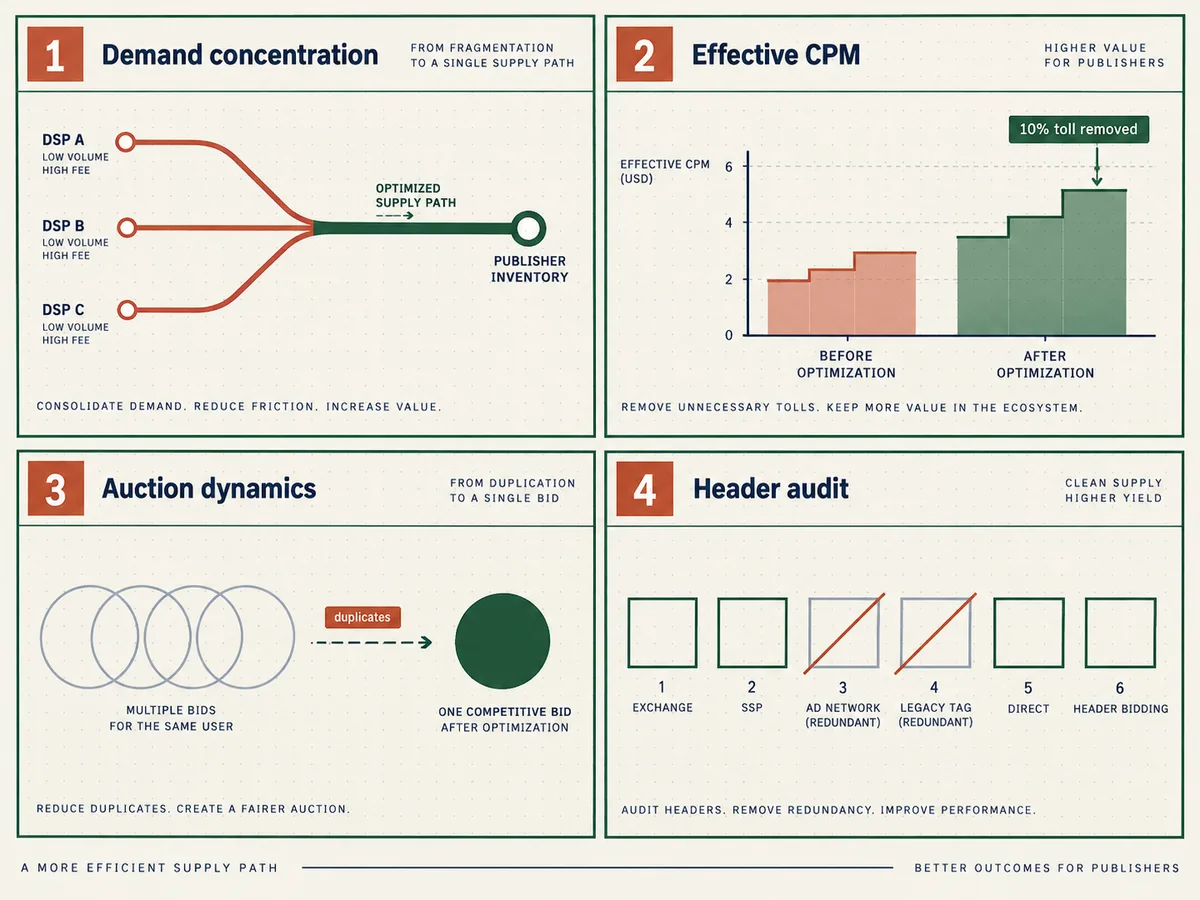
SPO does not change what your inventory is worth in the abstract. It changes which of your sales channels can actually monetize that worth. Concretely, four effects show up in publisher reports.
First, demand concentration. If a buyer previously bought your impressions through three routes and now buys through one, two of your demand partners stop bidding on you entirely. Publishers who spread inventory across many redundant resellers often interpret this as demand loss and panic. It is not demand loss. The buyer still wants your inventory. The buyer simply reaches it through a different door.
Second, effective CPM shifts. The buyer's savings on intermediary take rates do not all flow back to you, but some of them do. When a buyer removes a 10 percent toll from the middle of a path, the buyer can afford a higher clearing price at auction for the same net cost. Publishers on the short side of SPO typically see CPMs rise, not fall, because the buyer's budget stretches further on their path.
Third, auction dynamics change. When fewer duplicates of your impression circulate, each auction for your slot has fewer lowball bids and less noise. The clearing price reflects genuine competition for a genuine impression rather than a lottery among five copies. This is why SPO, despite reducing the raw request count, usually improves revenue per impression for publishers on the retained path.
Fourth, header bidding configurations get re-evaluated. A wrapper stuffed with redundant resellers of the same downstream demand produces exactly the duplicate problem buyers prune against. Publishers sometimes believe more demand partners always means more competition. In an SPO world, redundant partners can depress your revenue, because buyers see your inventory as a duplicate hotspot and route around your entire configuration.
The Sell-Side Response: Build Fewer, Better Paths
The correct publisher response to SPO is not to add more resellers and hope one sticks. It is to make the path through you the one buyers choose to keep.
Start by auditing your own daisy chains. Map every route your inventory takes to market: direct OpenRTB connections, header bidding partners, any partner that resells to other exchanges, and any exchange that resells onward. For each route, establish who takes a margin and what the buyer at the end of the route actually sees. If you discover that two of your partners both resell into the same downstream exchange, you are selling the same inventory to the same buyer twice through two toll roads. Buyers will prune one of those routes, and you have no control over which one survives. Consolidate first, on your terms.
Second, prefer partners that connect demand directly rather than reselling it. An SSP that holds direct deals with agencies and DSP integrations gives buyers a one-hop path to premium demand. An intermediary that buys from other SSPs gives buyers a two-hop or three-hop path with stacked fees. When you choose partners, ask a blunt question: does your demand originate with you, or do you resell someone else's?
Third, publish accurate supply metadata. Your ads.txt file should list only the partners who actually sell your inventory, with correct account IDs. Your partners' sellers.json files should declare your relationship to them with the correct seller type: direct seller or intermediary. Buyers cross-reference these files with the SupplyChain object in the bid request, and mismatches between declared and actual paths are a leading reason buyers blacklist routes. An honest, consistent declaration of a two-hop path beats a disguised two-hop path every time, because buyers price honesty into their bids and price opacity out of the market entirely.
Fourth, control latency. A short path that responds in 80 milliseconds beats a long path that responds in 300. Buyers with strict timeout windows simply cannot use slow paths, no matter what inventory sits behind them. Server-side connections, sensible wrapper timeouts and partner counts under control all protect the speed that makes your path viable.
WireAds as a Short Path
We built our infrastructure around the SPO logic that buyers apply, because our publishers win when buyers keep our route.
We connect demand directly. Our ad sources combine Prebid, OpenRTB, Google MCM, Google Ad Exchange demand and direct deals from global and local brand agencies, and we push all of it into a single WireAds SSP endpoint. A buyer that connects to us reaches agency direct deals, exchange demand and open market bids through one hop, not through a chain of resellers each taking a cut. That single-hop structure is precisely what buyers look for when they decide which path to keep and which to prune.
We also hold our inventory to a quality standard that survives buyer scrutiny. Our demand sources meet strict brand quality thresholds, and we filter unwanted ads before they ever reach your pages. Buyers doing SPO analysis examine fraud rates, viewability and brand safety incident rates per path, and a path with clean metrics retains budget quarter after quarter. Our filtering exists partly because it protects your users, and partly because it keeps the path through us on the winning side of every SPO review.
We work CPM-based and pay Net 30, globally, across web, app and CTV/OTT, in every country with Google monetization. That coverage matters for SPO because buyers prune paths per market: a path that performs in the US but fails in Southeast Asia gets cut in the second market. A path that works everywhere accumulates buyer budget everywhere.
Technical Signals Buyers Read When Choosing Paths
Buyers run SPO analysis on measurable data, and you should know which signals carry the most weight.
The SupplyChain object, carried inside OpenRTB bid requests, records every node in the chain from the publisher to the buyer. Each entry declares an SSP, its sellers.json relationship to the seller before it and whether that node is direct or intermediary. Buyers compare this declared chain against their own logs. A declared chain of two nodes that actually passes through four triggers exclusion.
Sellers.json and ads.txt serve as the verification layer. Buyers check that every seller in the SupplyChain object appears in the relevant ads.txt file with matching IDs, and that sellers.json declares the right seller types. Intermediaries are legal and common, but undeclared intermediaries are treated as a red flag. Mismatched or stale entries cost you bids even when the underlying chain is legitimate, so treat these files as operational assets rather than compliance paperwork.
Match rate and win rate close the loop. Buyers measure how often a bid on a given path actually results in a served impression. Paths with high mismatch rates, where the impression the buyer thought it bought is not the impression delivered, get pruned regardless of metadata quality. This is why accurate inventory representation inside the bid request matters as much as the chain declaration around it.
Practical Steps for Publishers
Turn the above into a quarterly routine. SPO reviews at buyers run on cycles, so your path hygiene should too.
- Enumerate every route your inventory takes to market, including resales you may not have authorized. Your ads.txt file plus partner interviews give you the map.
- Identify redundant routes to the same downstream demand and consolidate them. Keep the shorter, cheaper route.
- Verify your partners' sellers.json entries declare you correctly, and verify your ads.txt lists only active, authorized sellers with correct IDs.
- Measure end-to-end latency from bid request to buyer, and fix anything above your buyers' timeout thresholds.
- Ask each partner where its demand originates, and favor partners with direct agency deals, direct DSP integrations and exchange demand of their own.
- Review revenue per partner per month, not just gross revenue, and watch for partners whose bids thin out over time, which signals a buyer pruning the route behind them.
If you lack the internal bandwidth for this audit, our monetization services include path analysis and demand configuration as part of the work we do with publishers.
What SPO Means for Your Revenue Going Forward
The direction of the market is unambiguous. Buyers continue to centralize spend on fewer, shorter, better-verified paths, and every additional hop between you and the buyer now carries a measurable cost in lost bids. Publishers who ignore this sell the same inventory for less, through routes that buyers quietly defund. Publishers who act on it consolidate their demand, declare their chains honestly, keep latency low and position themselves one hop from real buyers.
The publishers that benefit most treat SPO as an ongoing negotiation rather than a one-time fix. Buyers re-evaluate paths continuously, so the work is a quarterly audit, a standing conversation with your partners about where their demand originates, and a willingness to cut resellers that add hops without adding demand. Done consistently, this work shows up where it counts: higher effective CPMs, steadier fill and fewer mystery gaps in your demand reports.