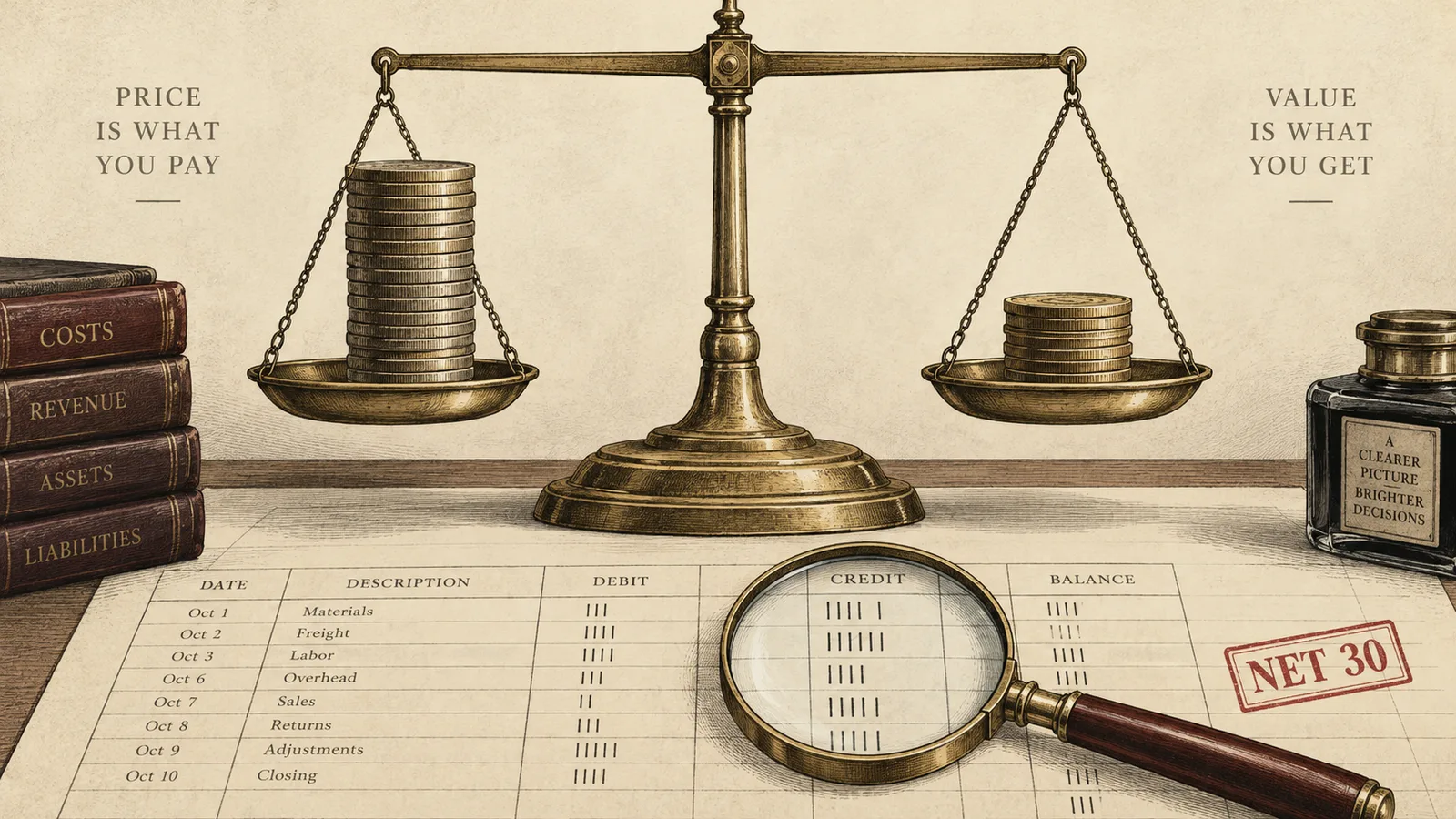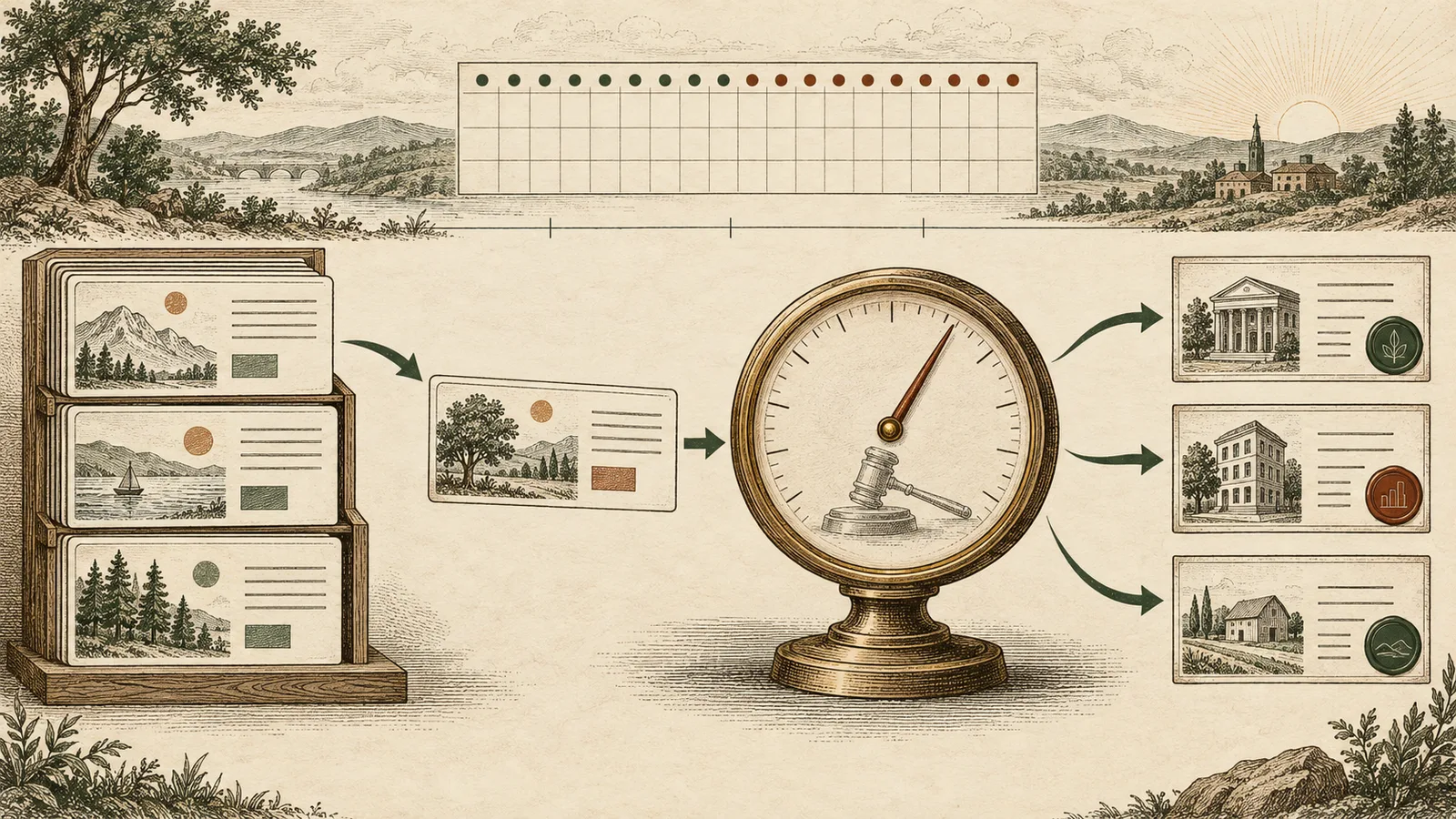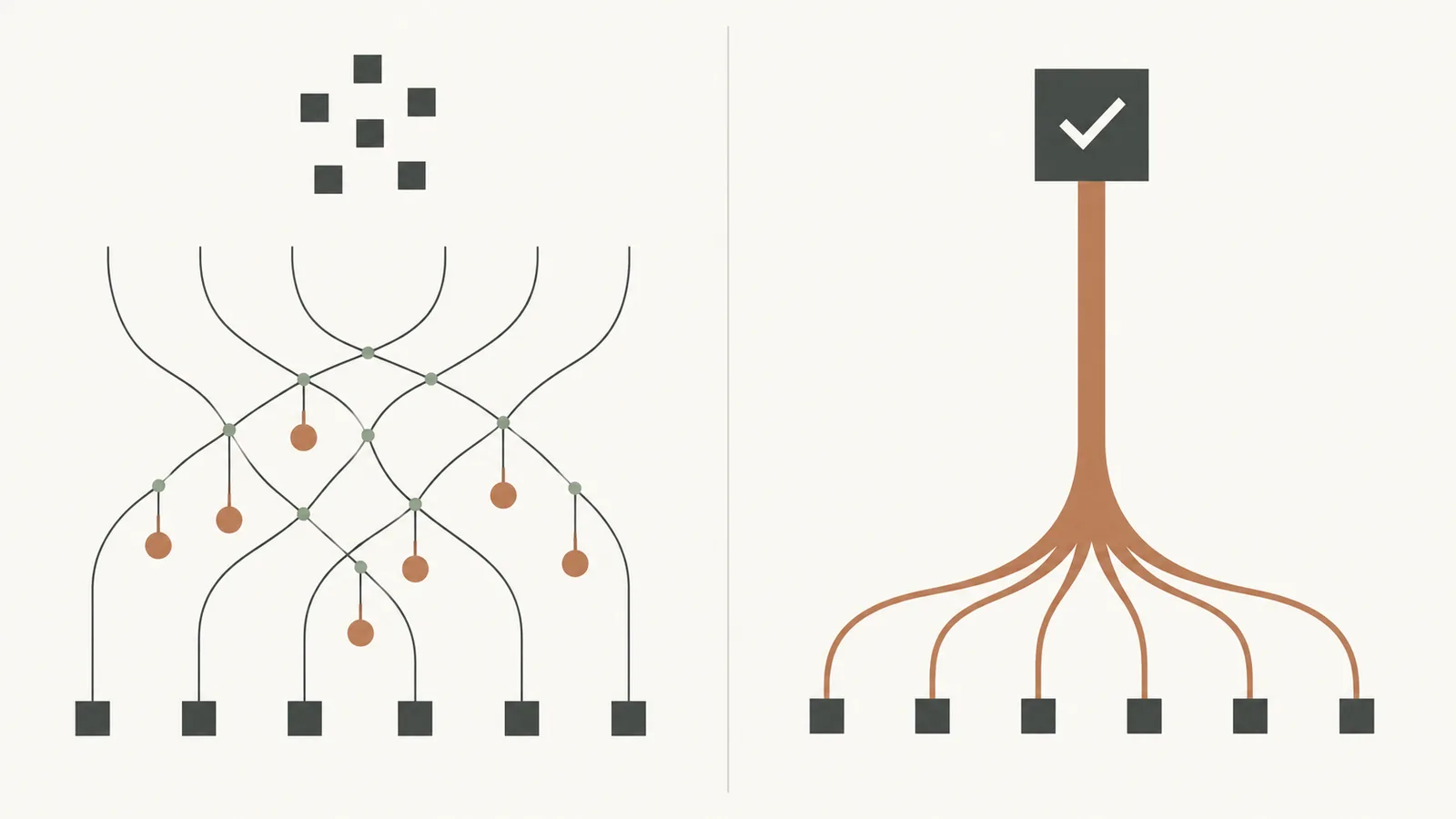
A direct reservation booked at a $12 CPM and an open market bid at $16 target the same impression, and the publisher captures the higher value only when both demands meet in one auction. Most yield loss does not come from weak demand. It comes from demand streams that never compete against each other, or that compete without rules. This article explains how direct sales and SSP demand interact, which deal structures fit which inventory, and how we balance the two inside our Direct Deals desk.
Direct and open market demand want the same impressions
Direct sales and programmatic demand are not two businesses. They are two pricing models for one product, the impression. A brand agency books a fixed CPM and a guaranteed volume because it wants certainty: known placements, known context, known price, and a media plan it can defend internally. Open market demand prices each impression in real time against whatever a buyer believes it is worth at that exact moment, to that exact user, in that exact context.
Open market demand reaches a publisher through several pipes at once. Prebid.js runs header bidding in the browser, Prebid Server and OpenRTB requests carry the same impression to exchanges and DSPs server side, and Google AdX demand arrives through Google MCM under Google Ad Manager. Authorized Buyers and additional exchange demand stack on top of that. Each pipe returns a bid, and the open portion of the auction picks the highest one.
When the two streams never meet, the publisher loses money in both directions. A direct reservation that sits on premium inventory at a stale rate blocks higher open market bids, and the publisher sells a $20 impression for $8 without ever knowing. If open market demand wins every impression by default, the publisher loses the predictability that agencies pay a premium for, and renewal negotiations start from zero every quarter.
The goal is neither direct-first nor open-market-first. The goal is a structure where each impression goes to the demand that values it most, and where the two streams push each other's prices up instead of quietly cannibalizing each other.
The unified auction settles the competition
The fix is structural, not tactical: route every demand source into a single auction with a single set of floor prices and a single decision. WireAds SSP combines Prebid, OpenRTB, Google MCM and Google AdX demand with the direct deals our desk negotiates with brand agencies, so all demand bids on the same ad spaces at the same time. Nothing wins by default. A deal wins because it outbid the market, or the market wins because it outbid the deal.
Inside one auction the economics get simple. The impression goes to the highest bid that clears the floor and passes our ad quality filters. We work CPM-based and we filter aggressively, because a high bid on a low quality creative damages the site and the direct pipeline along with it. Premium brand demand holds the highest standards, and strict filtering keeps unwanted ads out of the inventory that agencies buy directly.
Authentication raises what buyers will bid. A complete ads.txt file, a sellers.json entry and a SupplyChain object that shows every hop tell demand partners the inventory is legitimate. Authorized buyers pay more for supply they can trace, and that premium lands directly in the open market bids that compete with your direct rates. The same logic applies to app inventory through app-ads.txt and to CTV/OTT supply delivered over VAST.
We operate globally, across web, app and CTV/OTT, in every country with Google monetization, and the unified auction principle holds in all of them. The pipes differ by format and region, but the decision the publisher needs never changes: one auction, one floor, one winner per impression.
How the WireAds Direct Deals desk combines both streams
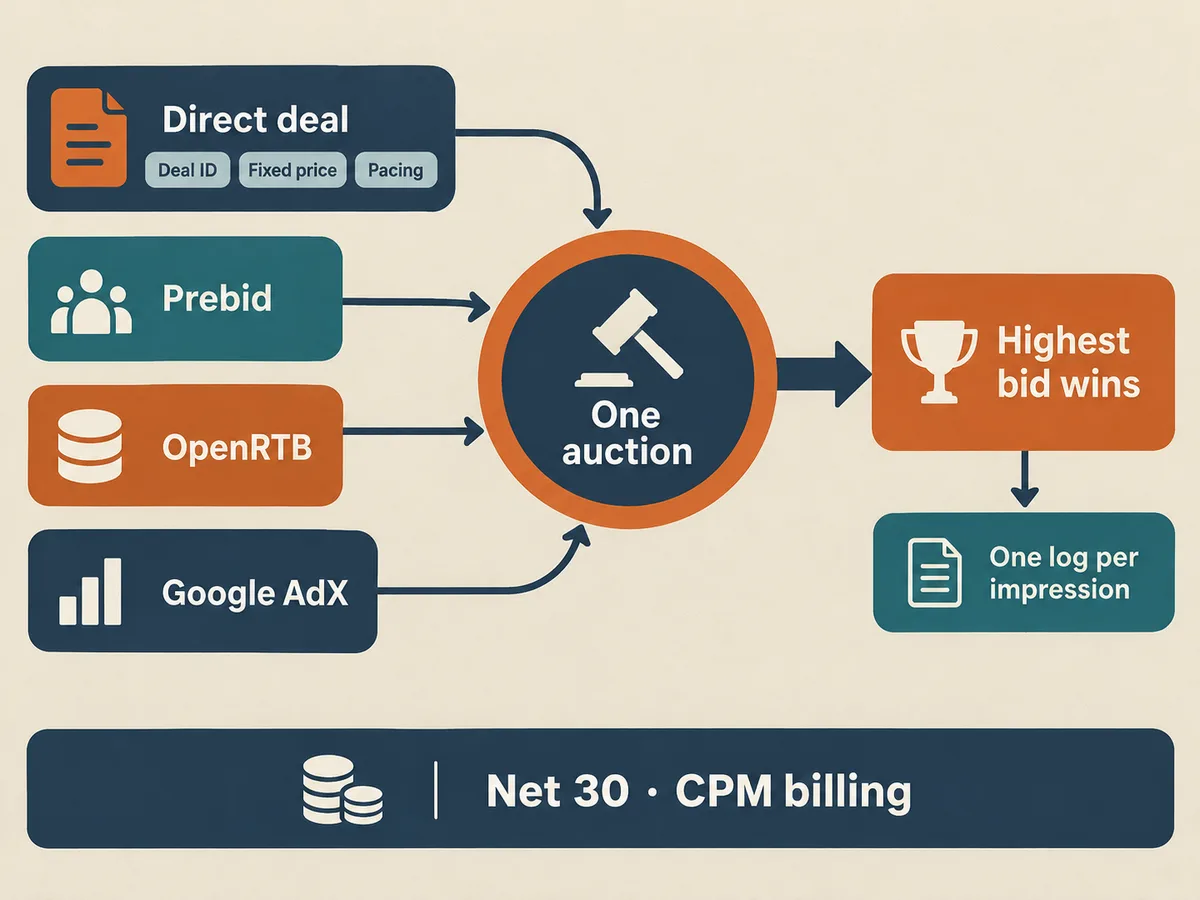
Global and local brand agencies push Direct Deals straight into our SSP instead of trafficking them through separate tags and a parallel ad server. Each deal carries a deal ID, a negotiated price, targeting and pacing terms. The deal then bids into the same auction as the open market demand, side by side with Prebid, OpenRTB and Google AdX bids.
This setup removes the classic failure mode where direct and programmatic teams work in separate systems and report in separate currencies. One auction produces one log, and that log answers the only question that matters per impression: which demand paid the most? When a direct deal posts the highest bid, the agency gets its delivery. When open market demand beats the deal rate, the publisher earns more, and the deal paces against the remaining inventory.
Direct deals also raise the open market side indirectly. Agencies that buy directly study placement performance, and the placements they target attract more programmatic demand over time, which pushes open market CPMs up. The two streams feed each other when the auction lets them interact, and we pay Net 30 on CPM billing so both revenue types settle on the same schedule.
The desk model also changes the negotiation itself. Because the agency sees the same auction data the publisher sees, rate talks start from actual clearing prices rather than from invented benchmarks. That transparency shortens sales cycles and keeps deal rates anchored to what the market genuinely pays for the same unit.
Deal types: guaranteed, preferred and open market
Programmatic direct covers two distinct contracts. Programmatic Guaranteed deals reserve a fixed number of impressions at a fixed price, and the publisher owes delivery. Preferred Deals fix a price without reserving volume: the buyer gets first access at the negotiated rate, and impressions the buyer passes on fall through to the open market. Google's framework for programmatic direct spans both models, guaranteed reservations and preferred deals with negotiated pricing (Programmatic Guaranteed vs Preferred Deals).
Guaranteed deals fit launch campaigns, seasonal pushes and any buyer that plans media weeks in advance. The reservation removes risk for the buyer and demands discipline from the publisher: underspend triggers make-goods, refunds or bonus inventory. Preferred deals fit always-on brand buyers who want a known price on premium placements without committing to volume. Open market demand fits everything else, the long tail of impressions that no deal targets.
Automation decides how much each model costs your ad ops team. The IAB Tech Lab's OpenDirect standard automates guaranteed deals through a standard API, so agencies can push, pause and manage reservations without manual tags or spreadsheet handoffs (OpenDirect programmatic guaranteed standard). The less manual work a guaranteed deal requires, the more deals a small team can run, and the more premium inventory leaves the open market at negotiated rates.
Price the three tiers correctly and the mix compounds. A guaranteed deal should carry the highest CPM on the placement, because it buys certainty and reserves supply. A preferred deal should sit above the typical open market clearing price for the same unit, or the buyer receives a discount for nothing in return. Open market floors should sit at or slightly below the preferred rate, so the market can beat the deal only when a hot impression genuinely justifies it.
Floor prices, pacing and First Look
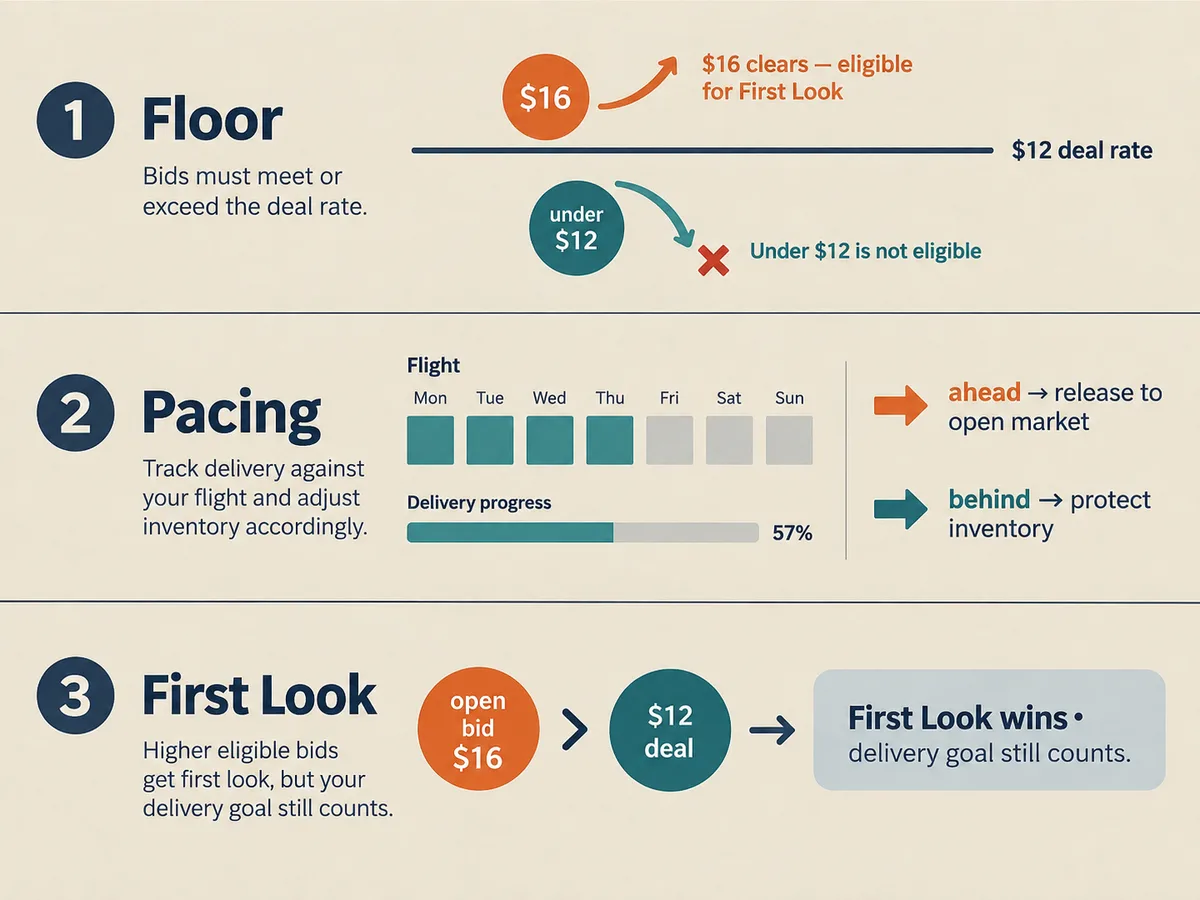
Floor prices are the main lever that keeps the balance honest. A floor set below the direct rate invites open market demand to undercut the deal, which feels like a win until the agency notices its delivery slipping. A floor set above the direct rate starves the deal and triggers make-goods. Set floors at the deal rate for deal-targeted inventory, and let the market beat the deal only when it truly pays more.
Pacing rules decide what happens when both demands want the same impressions at the same time. A guaranteed deal needs even delivery across its flight dates, so the auction reserves deal-targeted impressions in proportion to the remaining budget. When the deal paces ahead of schedule, the auction releases surplus impressions to the open market. When the deal falls behind, the auction protects its inventory until delivery catches up. This is standard behavior in Google Ad Manager, and it works the same way when deals bid through our SSP.
First Look resolves the last conflict: the case where a reservation holds an impression that the market values far higher. Google Ad Manager's First Look mechanism lets high-CPM bids serve ahead of the reservation when they beat the direct rate (About First Look). The reservation still counts toward its delivery goal, and the publisher banks the difference. Configure it with care: First Look only makes sense when open market bids reliably clear a meaningful premium over the deal rate, otherwise it adds auction latency and reporting noise for pennies.
Dynamic floors tighten the whole system further. Instead of one static floor per placement, the floor adjusts to recent clearing prices for the same unit, format and geo. Direct deal rates act as anchors: the dynamic floor never drops below the deal rate on deal-targeted inventory, so the market can beat the deal but never undercut it.
Measure the balance, not just the revenue
Blended revenue hides the decisions that actually move yield. Track four numbers per placement: direct revenue share, open market eCPM on the same unit, fill rate, and the delta between the deal rate and what the market would have paid. The fourth number is the one most publishers never compute, and it is the one that tells you whether a deal creates value or quietly subsidizes the buyer.
Run the comparison honestly. Take a placement with a preferred deal, look at the open market eCPM the same unit earns on non-deal impressions, and compare. If the market consistently clears above the deal rate, renegotiate the deal or let the inventory fall to the market. If the market clears well below, the deal does its job, and the right move is to sell more of that inventory directly. Review this monthly, because open market CPMs move with seasonality and demand shifts while deal rates stay fixed for the contract term.
Watch pacing reports weekly during guaranteed flights. Underspend accumulates quietly, and a deal that misses delivery by 20 percent in its final week costs more in make-goods than the whole flight earned in margin. Early pacing signals let your team open more inventory to the deal or renegotiate volume before the shortfall becomes a penalty.
A setup sequence that keeps both sides honest
A practical rollout takes an ad ops team roughly two to four weeks on a mid-size property, and it follows a fixed order:
- Tier the inventory. Rank placements by format, viewability and historical eCPM, and separate the top tier agencies want from the long tail the market should price.
- Set floors per tier. Anchor deal-targeted floors at the deal rate, and set open market floors from recent clearing data, not from hope.
- Connect all demand. Route Prebid, OpenRTB, Google MCM and AdX demand, plus the direct deals, into one auction so nothing wins by default.
- Tag every deal. Give each direct deal its own ID, targeting and pacing terms, so reporting attributes revenue and compares deal performance against the market impression by impression.
- Monitor weekly. Check pacing on guaranteed flights, compare deal rates against open market eCPMs, and adjust floors monthly.
- Renegotiate on data. Bring the auction logs to the agency: if the market beats the deal rate, the next deal should start from that number.
The sequence matters because each step feeds the next. Floors mean nothing if demand runs in separate auctions, and deal reporting means nothing without floors that make the comparison fair. Publishers who follow the order typically see direct rates and open market CPMs rise together, because authenticated, well-filtered inventory with real price discovery attracts stronger bids from both sides.
Balance is not a fixed ratio of direct to programmatic revenue. It is a mechanism: one auction, floors anchored to deal rates, pacing that protects guarantees, and a monthly comparison that shows where each stream underperforms. Run that mechanism and the two demand types stop fighting over impressions and start bidding against each other for them, which is exactly what a publisher wants.